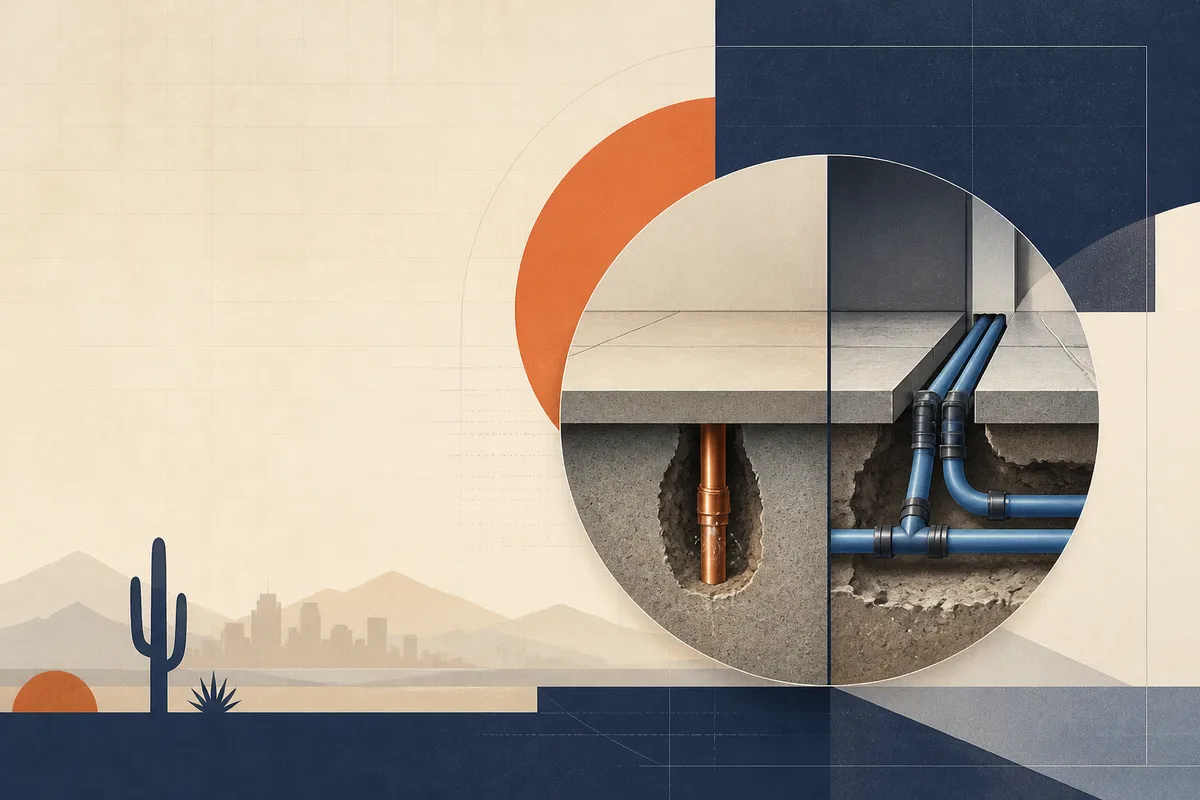
Choosing Between Spot Repairs and PEX Rerouting for Slab Leaks
Most homeowners view a wet spot on the floor or a spike in the water bill as a plumbing emergency, but it is actually a capital expenditure decision. A common error is treating the symptom—the leak—without assessing the remaining wall thickness of the copper piping buried beneath the slab. In alkaline soil, a single pinhole often indicates that the entire run of pipe is nearing the end of its functional life.
This guide breaks down the operational trade-offs between invasive spot repairs and strategic rerouting. It is designed for property owners who need to decide whether to invest in a permanent bypass or opt for a localized patch to restore service immediately.
Why the Lowest Initial Quote Often Leads to Higher Total Cost
Choosing the cheapest repair method without considering the state of the plumbing system frequently results in "chasing the leak." When a section of copper is patched, the physical disturbance and changes in pressure can trigger a secondary failure in a nearby weakened section of the same line.
- Spot repairs require jackhammering through finished flooring and concrete, creating significant dust and restoration costs that are often excluded from the plumbing quote.
- Direct repairs to copper under a slab may not be a permanent solution if the surrounding soil remains corrosive or if the pipe was improperly sleeved during original construction.
- Rerouting provides a new, accessible path for water, allowing for higher durability compared to aging metal lines.
- The labor cost to locate and excavate a single leak can sometimes approach the cost of a surgical reroute that bypasses the slab entirely.
The Slab Leak Mitigation Playbook
1Execute Precision Leak Detection
Before any concrete is broken, a technician must confirm the leak's exact coordinates using acoustic equipment and thermal imaging. Professional detection prevents unnecessary excavation and ensures the repair strategy is based on data rather than guesswork. Accurate leak repair costs for pipe lining typically range from $500 to $3,500, while digging and replacing pipes can cost between $700 and $5,000.
2Assess the Pipe Material and Age
If the home was built before the mid-2000s, it likely utilizes copper for pressurized water lines under the slab. When copper pipes are buried under concrete, they are susceptible to chemical reactions and wear; if multiple leaks have occurred, a whole-house repipe cost of $4,500 to $15,000 becomes a more viable long-term investment than repeated patches.
3Compare the Total Cost of Ownership
A spot repair might appear cheaper on paper, but it involves secondary expenses like flooring replacement. Rerouting is often cheaper than tunneling under the slab. According to current pricing, rerouting water lines can cost between $1,600 and $1,800 per section, while broader rerouting projects using PEX overhead commonly range from $2,000 to $6,000.
4Select the Least Invasive Route
If a reroute is chosen, the new line should follow the most direct path to the fixture while remaining accessible for future inspections. This method keeps the foundation intact and ensures that any future plumbing issues occur in the walls or attic where they are significantly easier to fix.
Comparing Repair Outcomes: Spot vs. Reroute
The decision between methods often comes down to how long the owner intends to hold the property. While a spot repair restores water flow, it leaves the original vulnerable material in the ground.
| Feature | Spot Repair (Direct) | PEX Rerouting (Bypass) |
| :--- | :--- | :--- |
| Foundation Impact | Invasive (Jackhammering) | Minimal (Small wall penetrations) |
| Future Leak Risk | High (in the same line) | Zero (for the bypassed section) |
| Restoration Needs | Flooring, concrete, and grout | Drywall and paint |
| Material | Copper or repair clamps | PEX (Cross-linked polyethylene) |
Homeowners who choose to reroute essentially start the clock over on their plumbing's lifespan for that specific run. This is particularly relevant in Scottsdale service area properties, where high-end finishes make slab excavation a prohibitively expensive aesthetic risk.
How Slab Leak Phoenix Helps
Addressing a water line failure requires a clear scope of work that differentiates between the plumbing fix and the necessary restoration. For residents in the area, a typical Slab Leak Repair begins with a non-invasive diagnostic phase to map the failure point. Homeowners should have their most recent water bill and any information regarding previous plumbing repairs ready for the technician. A professional estimate should clearly state whether the proposed price includes the cost of concrete backfilling and floor covering replacement. For a detailed assessment of your home's plumbing health, you can reach out via the request page or call (602) 555-0147.
Frequently asked questions
How do I know if I have a slab leak or just a leaky pipe?
Slab leaks occur beneath the concrete foundation and often manifest as warm spots on the floor, the sound of running water when all taps are off, or unexplained moisture at the base of walls. A standard leaky pipe is usually visible under a sink or behind a toilet, whereas a slab leak is hidden and requires specialized electronic equipment to hear the vibration of escaping water.
Will homeowners insurance cover the cost of a reroute?
Many insurance policies may cover the damage resulting from a leak, but they frequently do not cover the cost of the plumbing repair itself. You should review your specific policy or speak with an adjuster to determine if coverage applies to the access costs or the new PEX line.
How long does a typical reroute take to complete?
The duration of a reroute depends on the distance of the run and the accessibility of the walls and attic. A professional plumber will determine the most efficient path to bypass the failed section while minimizing disruption to the home's interior.
Is PEX piping safe for use in the Phoenix heat?
Yes, PEX is an industry-standard material that is highly resistant to the minerals found in Arizona water and the temperature fluctuations in attic spaces. It is flexible, which makes it ideal for rerouting through existing wall structures without the need for the extensive soldering required for copper.
What happens if I ignore a slab leak?
Ignoring a leak leads to foundation shifting, mold growth, and significantly higher utility bills. Over time, the escaping water can wash away the soil beneath the slab, creating voids that lead to structural cracking which is far more expensive to repair than any plumbing intervention.
Can you repair a slab leak without breaking the floor?
The only way to repair a leak without breaking the floor is to perform a reroute or an epoxy pipe coating. Rerouting is a common non-invasive method that abandons the broken pipe in the ground and installs a new one through an alternative path such as the attic or walls.
What happens when you get in touch: describe the situation, the team asks the few questions that actually change the answer, and you get a clear scope and next step — no obligation.