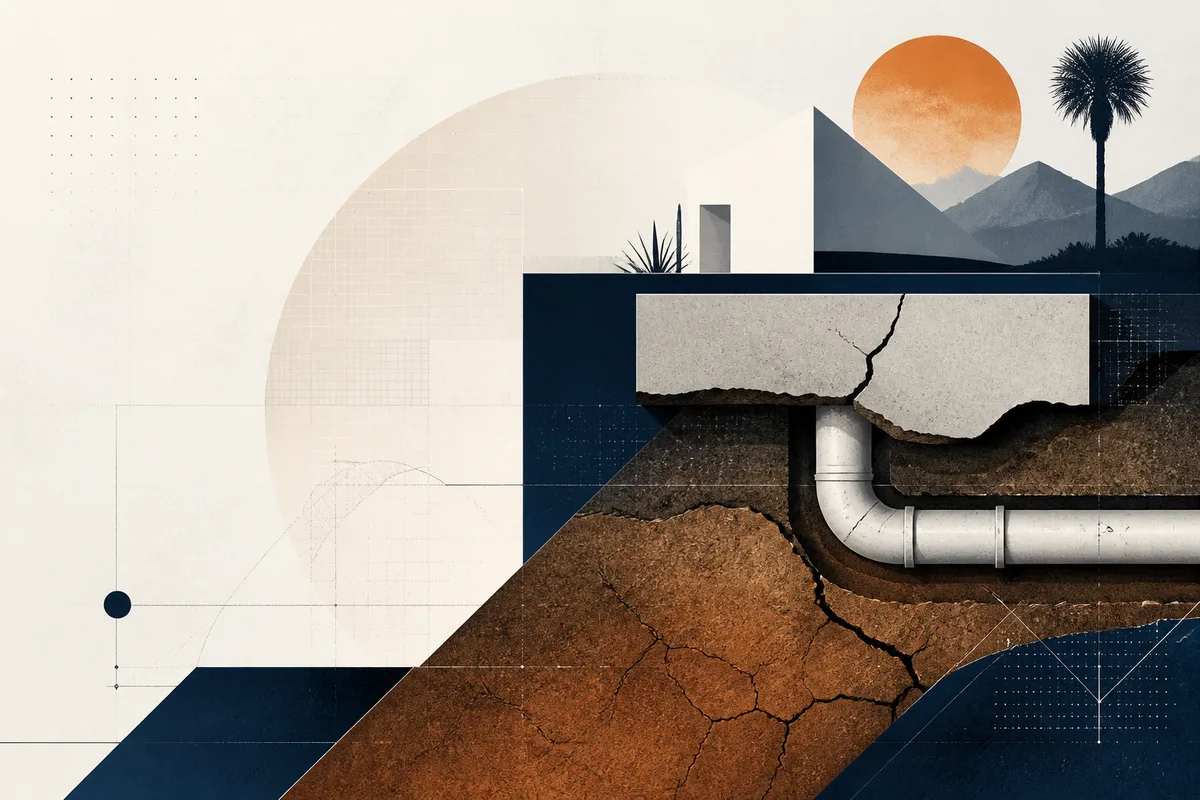
Why Arid Soil Mechanics Shear Foundation Plumbing in the Phoenix Valley
Homeowners across the Phoenix Valley often mistake slab leaks for simple age-related corrosion. The reality is more aggressive: the ground beneath these homes is a dynamic environment where soil expansion pipe failure is driven by intense thermal cycling. When surface temperatures drop significantly after sunset, the subsurface environment undergoes stress; the resulting contraction creates a high-friction environment that treats rigid plumbing like a structural bridge under load.
This guide breaks down the physics of sub-slab pipe stress and the mechanical reality of how desert soil interactions lead to catastrophic failure. Understanding the interplay between temperature, moisture, and friction is essential for any property owner managing a slab-on-grade foundation in an arid climate.
The Physics of Sub-Slab Mechanical Stress
Under-slab plumbing fails in the desert primarily because of the lack of "give" in the surrounding environment. While pipes are designed to handle internal pressure, they are often unprepared for the external forces of shifting earth. Incorporating variables such as soil type, temperature fluctuations, and rainfall allows for a more holistic understanding of these failure factors.
- Soil friction can trap the pipe in place, preventing it from expanding longitudinally as water temperature changes.
- Diurnal temperature swings cause the slab and the soil to move at different rates, creating a shearing effect at the point where the pipe exits the earth.
- Arid soils with high clay content expand significantly when exposed to moisture changes, increasing the compressive load on the pipe wall.
- Rigid copper lines lack the elasticity to absorb these movements, leading to pinholes or full radial fractures at the stress points.
The Playbook for Managing Foundation Pipe Movement
1Differentiate Between Corrosion and Mechanical Shear
A leak caused by soil movement usually manifests as a physical failure of the pipe material. If the pipe appears physically bent or flattened, the primary driver is external soil pressure or slab settling. The separation of pipes can be caused by the soil supporting the foundation changing through subsidence or expansion.
2Evaluate the Foundation Interface
The point where a pipe penetrates the concrete slab is the most common failure zone. Thermal expansion in concrete foundations can cause the slab to act like a guillotine if the pipe was not installed with an adequate sleeve or wrap to allow for independent movement.
3Assess Material Resilience Under Stress
Rigid copper was the standard for decades, but it is frequently the victim of underground pipe stress because it cannot flex with the earth. Modern alternatives often prioritize lateral flexibility to ensure that when the ground shifts, the pipe follows the movement rather than resisting it until it snaps.
4Monitor Moisture-Driven Soil Expansion
In the region, localized soil expansion is often triggered by a small, undetected leak that saturates the clay-heavy soil. This creates a feedback loop: the moisture causes the soil to swell, which puts more pressure on the pipe, eventually widening the leak or creating new ones nearby.
A measurement of how much a material changes in length per degree of temperature change, which determines the amount of stress a pipe exerts on its fittings when trapped in soil.
The Mechanism of Friction and Failure
When the ground temperature fluctuates, the soil grains physically rub against the exterior of the pipe. In arid climates, where the soil is often abrasive and alkaline, this friction can wear down the wall of a copper pipe from the outside in. This process is accelerated during the summer months when irrigation and monsoon rains introduce moisture that lubricates the soil, allowing it to shift more dramatically against the foundation.
As the ground shifting water leak develops, the void created by the escaping water can cause the soil to collapse or bridge, leaving sections of the pipe unsupported. Without the structural support of the earth, the weight of the slab above or the vibration of water hammers can easily crack aged ABS or copper lines.
How Slab Leak Phoenix Helps
Managing a foundation leak in an arid climate requires a specific sequence of diagnostics to ensure the repair lasts. A typical engagement begins with electronic acoustic location or thermal imaging to pinpoint the stress site without unnecessary excavation. For many homes in the Scottsdale service area, the standard approach involves determining if a localized slab leak repair is viable or if the soil conditions necessitate a full reroute to bypass the high-stress sub-slab environment. Property owners should have their recent water bills and any history of foundation cracks ready, as these are primary indicators of systemic soil movement. If a hidden leak is suspected of destabilizing a foundation, call (602) 555-0147 or submit a request via https://slableakphoenix.com/.
Frequently asked questions
Does a slab leak repair always require a permit?
Local building codes generally require permits for plumbing repairs that involve replacing or altering concealed piping within the home's structure. Minor, accessible repairs may proceed quickly, while major reroutes or main line replacements typically involve a formal inspection process to ensure safety and compliance.
Why does my water bill spike specifically during the summer?
While increased irrigation is common, extreme heat also causes significant soil contraction, which can open up small cracks in foundation pipes. If usage remains high even when irrigation systems are off, the temperature-driven movement of the soil may have triggered a slab leak.
Is PEX better than copper for arid soil?
Modern polymers like PEX are designed with flexibility in mind. In areas prone to soil shifting, a flexible pipe's ability to move within a trench or sleeve can make it more resilient to shearing forces than rigid metal piping when subjected to soil instability and foundation changes.
Can a slab leak cause my foundation to crack?
Yes, because water leaking under a slab saturates the soil, leading to localized heaving or subsidence. In arid regions, clay-rich soil expands when wet, which can exert enough upward pressure to crack a concrete slab or cause doors to misalign.
How do I know if the leak is in the main line or under the slab?
A main line leak usually occurs between the water meter and the house, often resulting in a damp spot in the yard or a vibrating meter. A slab leak is located under the footprint of the home and is typically identified by warm spots on the floor, the sound of running water behind walls, or unexplained moisture at the baseboards.
What happens when you get in touch: you describe the situation, we ask the few questions that actually change the answer, and you get a clear scope and next step — no obligation.